Martin Luther King Jr. Day 2026: Power, Love, and Justice in Community
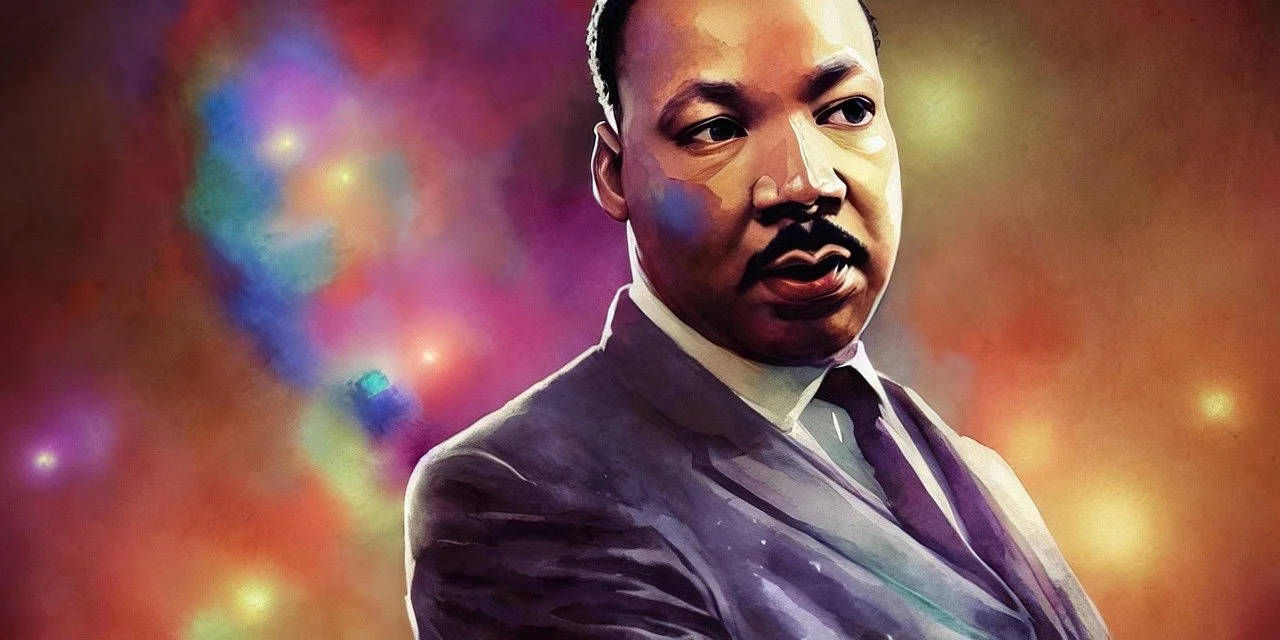
A stylized portrait of Dr. Martin Luther King Jr. in a suit, looking thoughtfully to the side against a glowing, abstract background of warm and vibrant colors.
As we honor Martin Luther King Jr. Day in 2026, the Blackyard Collective pauses not only to remember Dr. King’s life but to recommit ourselves to the radical clarity of his vision. Dr. King did not simply dream of inclusion within unjust systems—he demanded their transformation. His work called for a community rooted in love, power, and justice, held together by collective responsibility and moral courage.
“Now, we got to get this thing right. What is needed is a realization that power without love is reckless and abusive, and that love without power is sentimental and anemic. Power at its best is love implementing the demands of justice, and justice at its best is love correcting everything that stands against love.”
— Rev. Dr. Martin Luther King Jr., Where Do We Go from Here: Chaos or Community? (1967)
This quote speaks directly to the work of community-building. It reminds us that love alone is not enough if it is disconnected from power, and power alone is dangerous if it is detached from love. For Dr. King, justice was not abstract—it was love made visible through action, policy, resistance, and collective care.
Dr. Martin Luther King Jr. was murdered 57 years ago, on April 4, 1968, while fighting to dismantle needless wars, economic exploitation, systemic racism, and deepening inequality. More than half a century later, we find ourselves still engaged in this same struggle. There is a deliberate and coordinated effort to roll back decades of civil rights protections, erase Black history and intellectual thought from public memory, modern-day slave patrols driven by racialized suspicion, and concentrate wealth and power by exacerbating already entrenched inequities.
Far too often, Dr. King’s legacy has been softened and distorted—reduced to a version of himself that is easier to digest, less confrontational, and less radical than the truth. Dr. King was not simply a civil rights activist seeking tolerance; he was a radical advocate for economic justice, anti-militarism, and collective liberation. He understood that systems of oppression are interconnected, and that freedom for Black people required a fundamental reordering of power in this country.
The work we do at the Blackyard Collective is rooted in this radical tradition. Our mission is grounded in justice, community care, and liberation—not respectability politics or incremental change that leaves the most marginalized behind. We believe, as Dr. King did, that justice demands courage, discomfort, and collective action.
In today’s political climate, there is a growing force determined to silence, erase, and dismiss Black queer and trans folx. These attacks are not isolated—they are part of a broader strategy to weaken movements, fracture communities, and deny the full humanity of those who live at the intersections of multiple forms of oppression. The Blackyard Collective stands firmly against this erasure.
We affirm that Black queer and trans people are not peripheral to the movement for justice—we are central to it. Our lives, leadership, joy, and resistance embody the very principles Dr. King articulated: love that is powerful, power that is accountable, and justice that restores dignity.
On this Martin Luther King Jr. Day, we call on our community to move beyond symbolic remembrance and into meaningful action. Let us organize, protect one another, tell the truth about our history, and build futures rooted in collective liberation. Power, guided by love, remains one of our most powerful tools—and together, we can use it to correct everything that stands against love.
tlc